How Can Professional IT Support and Managed Services Transform Your Business Operations?
Understanding What Modern IT Support Actually Means for Your Organization
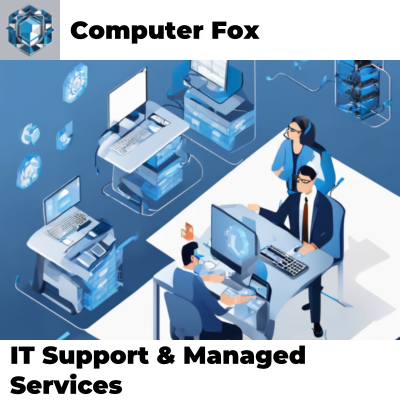
The landscape of technology support has transformed dramatically over the past decade. What once meant simply calling a technician when something broke down has evolved into a comprehensive, proactive approach to managing an organization's entire digital infrastructure. Computer Fox specializes in this modern interpretation of IT support, recognizing that businesses today face challenges that extend far beyond occasional hardware failures or software glitches.
Modern IT support encompasses preventative maintenance, security monitoring, network optimization, and strategic technology planning. Rather than waiting for disasters to strike, managed IT services operate on the principle that consistent oversight prevents catastrophic failures. This philosophy represents a fundamental shift in how businesses should think about their technology investments.
Consider the hidden costs associated with reactive IT approaches. When systems fail unexpectedly, productivity halts. Employees cannot access critical files. Customers cannot reach your business. Revenue streams dry up instantaneously. The financial impact extends beyond merely fixing the immediate problem—it includes lost productivity, damaged customer relationships, and the potential for data compromise. A single data breach can cost organizations hundreds of thousands of dollars, not to mention the reputational damage that persists long after systems are restored.
The Distinction Between Break-Fix and Managed Services
Break-fix IT support operates reactively. Something malfunctions, you call for help, and a technician arrives to address the specific issue. Once resolved, support ends until the next problem emerges. This model creates uncertainty around costs, as expenses fluctuate based on how frequently problems occur. Additionally, this reactive stance leaves organizations vulnerable to preventable issues.
Managed IT services, by contrast, represent a partnership between your organization and your technology provider. Rather than waiting for failures, managed service providers continuously monitor systems, apply security updates, optimize performance, and implement strategic improvements. Computer Fox takes this approach, providing consistent oversight that catches potential problems before they impact operations.
The financial implications matter considerably. Predictable monthly costs replace unpredictable emergency expenses. Organizations can budget accurately and allocate resources toward growth rather than crisis management. More importantly, service levels improve dramatically when someone monitors your systems continuously rather than intervening only after problems become visible.
Why Local IT Support Services Offer Distinct Advantages Over Remote-Only Solutions
Geographic proximity matters more than many business leaders initially recognize. Local IT support providers understand regional infrastructure, know the specific telecommunications landscape, and can respond physically when situations demand in-person intervention. Computer Fox's presence at 123 Main St, Local City, CA 90210 means rapid response times and the ability to address hardware issues that cannot be resolved through remote connections alone.
The Importance of Physical Presence in Technology Management
Certain IT challenges simply cannot be solved remotely. Hardware repairs require hands-on work. Network infrastructure installation demands physical presence. Security assessments benefit from on-site evaluation. While remote support excels at troubleshooting software issues and providing guidance, it has inherent limitations when organizations need comprehensive technology management.
A local provider like Computer Fox combines remote monitoring capabilities with the ability to dispatch technicians quickly when physical intervention becomes necessary. This hybrid approach maximizes efficiency. Most issues receive resolution through remote support, eliminating unnecessary travel time and expenses. When on-site work becomes essential, local proximity means minimal delay.
Building Relationships With Your Technology Partner
Choosing a local IT support provider creates opportunities for relationship building that purely remote services cannot match. When your IT provider understands your business, your staff, and your specific operational challenges, support becomes more personalized and effective. The team at Computer Fox doesn't simply fix problems—they understand the context within which those problems arise.
This familiarity breeds better strategic planning. A local provider who regularly works with your organization can offer insights about technology investments that align with your actual needs rather than generic recommendations. They recognize seasonal variations in your technology demands. They understand which employees require specific training and support. They anticipate challenges before they become urgent.
Furthermore, local providers have reputational stakes in your community. Their success depends partly on the satisfaction of clients they see regularly, whose success they invest in personally. This creates alignment between your interests and their interests in ways that distant, faceless support centers simply cannot replicate.
Comprehensive Security Considerations That Managed IT Services Address
Security represents perhaps the most critical concern for contemporary businesses. Cybersecurity threats evolve constantly, becoming more sophisticated and targeting increasingly smaller organizations. The assumption that "we're too small to be targets" has proven catastrophically false. Ransomware attacks, phishing campaigns, and data breaches affect businesses of all sizes, and the consequences can prove devastating.
Multi-Layered Security Approaches That Professional Providers Implement
Comprehensive managed IT services implement security through multiple overlapping layers. This defense-in-depth strategy ensures that if one layer fails, others provide continued protection. Computer Fox approaches security with this sophisticated methodology rather than relying on single solutions.
The foundational layer involves network security. Firewalls, intrusion detection systems, and network monitoring detect and prevent unauthorized access attempts. These systems operate continuously, blocking threats before they reach your internal systems. They analyze traffic patterns, identifying suspicious activity that might indicate compromise.
Beyond network security, endpoint protection becomes crucial. Every device connecting to your network represents a potential entry point for threats. Computers, smartphones, tablets, and other devices require individual protection. Professional managed services deploy endpoint detection and response solutions that monitor device behavior, identifying malicious activities and containing threats before widespread damage occurs.
The Role of Human Behavior in Security Posture
Technology alone cannot secure an organization. Human behavior remains the most significant vulnerability in security posture. Employees inadvertently click malicious links, open suspicious attachments, or share credentials with bad actors. Training and awareness programs that teach staff to recognize threats represent essential security components.
Managed IT providers like Computer Fox implement security awareness training, helping employees understand how they contribute to organizational security. This training addresses common attack vectors: phishing emails that appear legitimate but contain malicious links, social engineering attempts that manipulate employees into revealing sensitive information, and USB devices left in parking lots that attempt to exploit curiosity and access networks.
Regular security assessments identify weaknesses before attackers discover them. Professional providers conduct vulnerability testing, attempt to breach defenses through authorized penetration testing, and generate detailed reports identifying specific improvements needed. This proactive approach prevents the discovery of weaknesses by actual criminals.
Addressing Common Technology Challenges That Drain Resources and Productivity
The Hidden Costs of Outdated Systems and Technical Debt
Businesses frequently defer technology upgrades and maintenance, attempting to extend the life of existing systems. While this seems economical in the short term, it creates accumulating technical debt that ultimately becomes far more expensive. Outdated software becomes increasingly difficult to support, less secure, and prone to unexpected failures. Old hardware consumes excessive power, breaks down frequently, and slows operations considerably.
When systems approach obsolescence, they require attention disproportionate to their value. A technician might spend hours troubleshooting a problem that would simply disappear with a hardware upgrade. Software applications designed for modern systems run with glacial slowness on aging hardware. Networks built on ancient infrastructure cannot accommodate current connectivity demands.
Managed IT services help organizations navigate technology transitions strategically. Rather than allowing systems to deteriorate until crisis forces action, professional providers recommend timely upgrades and implement them systematically. This approach distributes costs across time, preventing the massive capital expenditures required when everything fails simultaneously.
Performance Optimization That Extends System Lifespan and Improves Efficiency
Even relatively modern systems can suffer from performance degradation. Software accumulates over time, consuming system resources. Temporary files multiply. Malware or unnecessary applications reduce available computing power. Hard drives fragment, slowing data access. Memory fills with unnecessary processes.
Professional IT support addresses these issues systematically. Computer Fox optimizes system performance through:
- Removing unnecessary applications and processes that consume resources without providing value
- Clearing temporary files, caches, and accumulated data that serve no ongoing purpose
- Defragmenting storage and optimizing disk usage patterns
- Updating device drivers that control hardware components
- Configuring applications for optimal performance based on actual usage patterns
- Implementing monitoring that identifies when systems approach performance thresholds
These optimizations often produce dramatic improvements in user experience and operational efficiency. Computers that previously took minutes to boot start in seconds. Applications that formerly froze intermittently now run smoothly. Network bottlenecks that caused frustration disappear.
Data Management and Backup Strategies That Prevent Catastrophic Loss
Data represents the lifeblood of contemporary organizations. Losing customer databases, financial records, design files, or operational documentation can threaten business viability. Yet many organizations lack comprehensive backup and disaster recovery strategies. Some maintain backups but never test whether data can actually be recovered when needed. Others store backups in locations vulnerable to the same disasters that threaten primary systems.
Professional managed IT services implement robust data protection through multiple mechanisms. Regular automated backups ensure that recent versions of critical data exist in protected locations. These backups occur without requiring user action or remembering to manually initiate processes. Backup systems verify that data actually gets backed up and that backup processes complete successfully.
Disaster recovery planning